
Dancing at the Edge of the Future: Next Life Delivery Turns Pop Into Soft Resistance
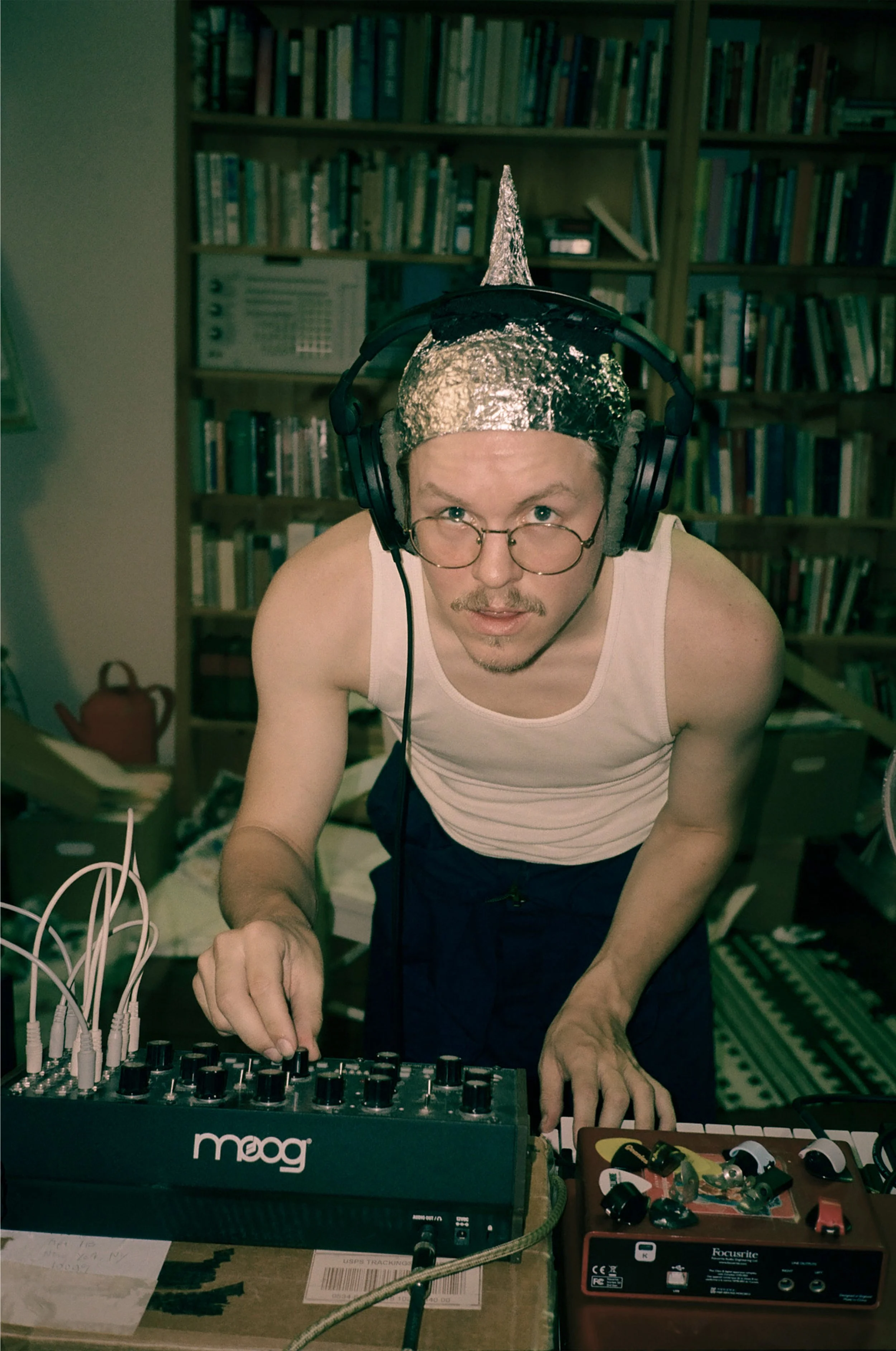
On the surface, Next Life Delivery feels bright, danceable, and inviting; the kind of indie pop you might hear as the party winds down. But beneath the grooves lives something more unsettled: cultural anxiety, political undercurrents, generational exhaustion, and the strange resilience of finding joy anyway. Blending sharp observation, humor, and emotional unease, the project’s debut EP Program Obsolete wraps systemic critique in glossy textures and movement-ready beats.
In conversation with Jackson Craig, we talked about dancing through collapse, character-building as a form of creative freedom, DIY world-building, and why subtlety can sometimes convey the most.
Not On Stage: Next Life Delivery has been described as indie pop for the end of the party — bright on the surface, uneasy underneath. When did you realize this project was about the emotional comedown rather than the high itself?
Jackson Craig: Most of the music starts with lyrics because I have something I want to say first. I’ve been making music for a while, but this project is more of an offshoot — it’s more politically minded and speaks to social issues in my life and my friends’ lives. Around the same time, I fell in love with dance music, and those two things merged. I like the idea of people dancing to something that’s also subtly broadcasting ideas. You might not catch it on the first listen; you’re just moving, but over time, the meaning reveals itself.
Not On Stage: You blend cultural observation, humor, and anxiety in a very intentional way. How much of Next Life Delivery is a character, and how much is directly personal?
Jackson Craig: I started as a folk singer-songwriter, so this project feels like branching into a new artistic realm. The ideas and sentiments are very personal, but creating a new project gave me freedom to do more world-building and step into a character who’s different from my day-to-day self. That distance lets me explore sounds I haven’t worked in as much and say things I might not normally say outright. It’s like a vessel, but the core feelings are still mine.
Not On Stage: Program Obsolete frames itself as feel-good pop with dark humor. Why make the record sound inviting while dealing with inherited messes and systemic failure?
Jackson Craig: I think every artist has some kind of message. Since this EP is an introduction to an idea, it felt important for it to be inviting and have pop sensibilities. I’ve grown to love pop music, even though I come from rock and punk backgrounds. I really admire artists who balance accessibility with deeper undertones — something that pulls you in, then makes you pause on the second listen.
Not On Stage: The EP asks not whether the future will arrive, but who it’s being made convenient for. Was there a moment that sparked this idea?
Jackson Craig: The name Next Life Delivery is a play on “next day delivery.” It points to how massive companies create convenience in ways that hide the cost; personal freedoms, labor, and things we don’t always see. A lot of this project asks how we might resist in small ways instead of just accepting those terms. Over the last few years, especially with tech and AI changing everything, it feels like the future could become extremely easy for a small group of people and much harder for everyone else. Now more than ever, there are ways that the future could go where it could be really easy for a small group of people, and life could just get crazy for everyone else.
Not On Stage: Pleasure, movement, and wit show up as coping mechanisms. Is dancing through collapse resistance, survival, or something else?
Jackson Craig: Resistance is the keyword. I’m speaking to my generation; people who grew up with climate anxiety, social media, and constant instability. But I’m also inspired by how resilient my communities are. We can hold multiple truths: the world is heavy, but we still find ways to dance, joke, and build community. Meme culture even turns despair into connection. That ability to transform heaviness into something shared feels powerful. Part of what I wanted to explore with this project is how people can hold multiple truths at once, recognizing that serious things are happening in the world while also channeling that energy into positive outlets, whether that’s going out to dance, joking about it, having fun, or transforming it into something meaningful.
Not On Stage: As both a visual artist and musician, how does your visual practice influence your songs?
Jackson Craig: I love immersive worlds, but big visuals often require big budgets. I come from Philly’s DIY rock scene, which taught me you can build identity in smaller, personal ways; zines, drawings, flyers, handmade visuals. All my single covers and website visuals are hand-drawn. Keeping things handcrafted helps it feel personal and grounded. That’s the spirit I’m bringing to this project. I have a background in drawing and painting, so I design my own single covers and website visuals. I think those handcrafted elements make the project feel more personal and grounded. World-building doesn’t have to mean huge productions — it can come from consistency, intention, and a clear visual language that reflects the music’s themes.
Not On Stage: When writing, what leads first — rhythm, concept, or melody?
Jackson Craig: Concept usually leads for me, especially lyrically. For this project, though, my process changed a lot. In the past, I would write music and lyrics together on guitar. Here, because the dance and electronic elements were so important, I often developed the musical side separately, focusing on groove and feel first. Many songs started with a title or a specific phrase, and I’d build the lyrics out from there. Then it became a puzzle: how do these words fit into music that feels very different from my older work? That separation actually opened up new creative possibilities and pushed me out of my habits.
Not On Stage: Do you see this EP as a diagnosis of the present or the first chapter of a longer conversation?
Jackson Craig: I see this EP as the beginning of a longer conversation. The title references programmed obsolescence — the idea that products are designed to break so we keep consuming. I’m using that as a metaphor for larger systems that may be fundamentally broken but still running in the background. The project asks whether we’re ready to acknowledge that something isn’t working at its core, or if we’ll wait to be told again that it’s time for the next replacement. It’s less about offering answers and more about creating a sense of awareness and questioning.
Not On Stage: Will Next Life Delivery continue as cultural critique, or move toward something more instinctual and raw?
Jackson Craig: For now, I want to keep exploring cultural critique through this project, but in a way that includes humor, satire, and play. I don’t want it to feel preachy. There’s still space for more raw and emotional moments — like “No Wonder,” which is slower and more personal, dealing with growing up in internet culture and feeling boxed in. Even when I’m working through a character or concept, it’s always coming from something I genuinely feel. I hope that the music sparks conversation, helps people feel seen, and builds a sense of community. If someone hears it and feels less alone in their confusion or frustration about the world, that means a lot.
