
Orbiting Identity: Confidence, Community, and Creative Independence in Satellite
In this interview with Not On Stage, Charlotte Sands reflects on how her album Satellite captures a turning point in both her career and personal growth. Since first releasing music in 2018, she has moved from making anxious, overly calculated decisions to creating from a place of calm confidence and maturity. The album represents her full human experience — the highs, lows, obsessions, friendships, love, and ambition that shaped her over several years. The title Satellite symbolizes constant orbit and unseen connection: the enduring bond between her and her fans across time and distance, as well as the emotional gravity of relationships and dreams that people revolve around, sometimes in healthy collaboration and sometimes in overwhelming dependence.
She also opens up about the realities of remaining independent while touring with major artists. Without label backing, she takes on nearly every role herself — directing and editing music videos, designing graphics, running social media, contributing to tour planning, and building marketing strategies from the ground up. Limited resources require creativity and sacrifice, but they also reinforce her deep commitment to fully realizing each song’s visual and emotional world. Rather than relying on traditional marketing power, her strategy centers on community, finding more value in directly engaging and growing with her fan base than in large-scale promotional campaigns. In many ways, Satellite becomes a testament not just to artistic evolution, but to resilience, self-trust, and the power of collective connection.
Not On Stage: “Satellite” is rooted in themes of identity and self-discovery. At this point in your career and life, how would you define your sense of self compared to when you first started releasing music in 2018?
Charlotte Sands: I’m so much more confident now, in myself, in what I make, and in the decisions I make. That’s a huge part of this album: the confidence to exist as a full being instead of just small portions of myself. This project reflects my entire human experience over the last few years — the highlights, the lowlights, and everything in between. In the past, I probably felt like I needed to be more cohesive and obvious in my choices. Now I allow more room for people to interpret things in their own way. I feel more mature and less anxious, and I’m making decisions from calm confidence instead of anxious feelings.
Not On Stage: The title “Satellite” suggests orbiting, distance, connection, maybe even isolation. What does the metaphor of a satellite mean to you personally, and how does it thread through the album?
Charlotte Sands: When I chose Satellite, I was thinking about something constantly revolving — something that’s always there, even when you can’t see or feel it. That’s how I feel about the community built around this music. We’re often far apart, sometimes years between seeing each other on tour, but it still feels like we’re in motion together because of this thread we’ve held onto for so long. As I thought about it more, I realized the entire album connects to this idea of orbiting — whether it’s revolving around my career and future, obsessive feelings in relationships, or the calm collaboration of love and friendship. So many songs deal with that sense of depending on something else, both positively and negatively.
Not On Stage: You’ve built your career independently while touring with artists like My Chemical Romance, 5 Seconds of Summer, and Yungblud. How has staying independent shaped the way you approach this album creatively and strategically?
Charlotte Sands: Being independent is really challenging but also very rewarding. I’m proud of what we’ve accomplished as a small team. Creatively, it can be stressful trying to bring big visual ideas to life without major resources. Sometimes it feels like stapling cardboard together in a backyard and figuring out how to make it work. But visuals are necessary to me. Each song needs to exist in its own world fully. Because of that, I’ve learned how to do graphic design, edit my own music videos, and take on multiple creative roles. I’m proud that I know how to do those things, and I think it’s important for artists to have that control.
Without major label budgets or radio backing, I focus on the foundation: the fans. I see this album as collaborative — it exists because of the community supporting it. Instead of relying on big marketing plans, I think about how to get the core fanbase excited and involved. Recently, I started a Discord activity calendar with daily engagement ideas. Watching fans connect, share art, and build friendships is more rewarding to me than traditional marketing. The strategy always comes back to community.
Not On Stage: What other roles have you had to take on as an independent artist to bring your vision to life?
Charlotte Sands: Honestly, I feel like I’ve done almost every role in a music career besides being a lawyer. I direct and edit my own music videos, conceptualize them, run all my social media, create graphics, and handle digital marketing strategies. I’m involved in tour routing and management decisions, and of course, writing and producing music. Being independent means being aware of everything; Financially, creatively, and strategically. If you can’t afford someone to style you, you learn how to style yourself. I even started making my own clothes so I could prioritize other parts of a project. You just have to be willing to learn and get your hands dirty.
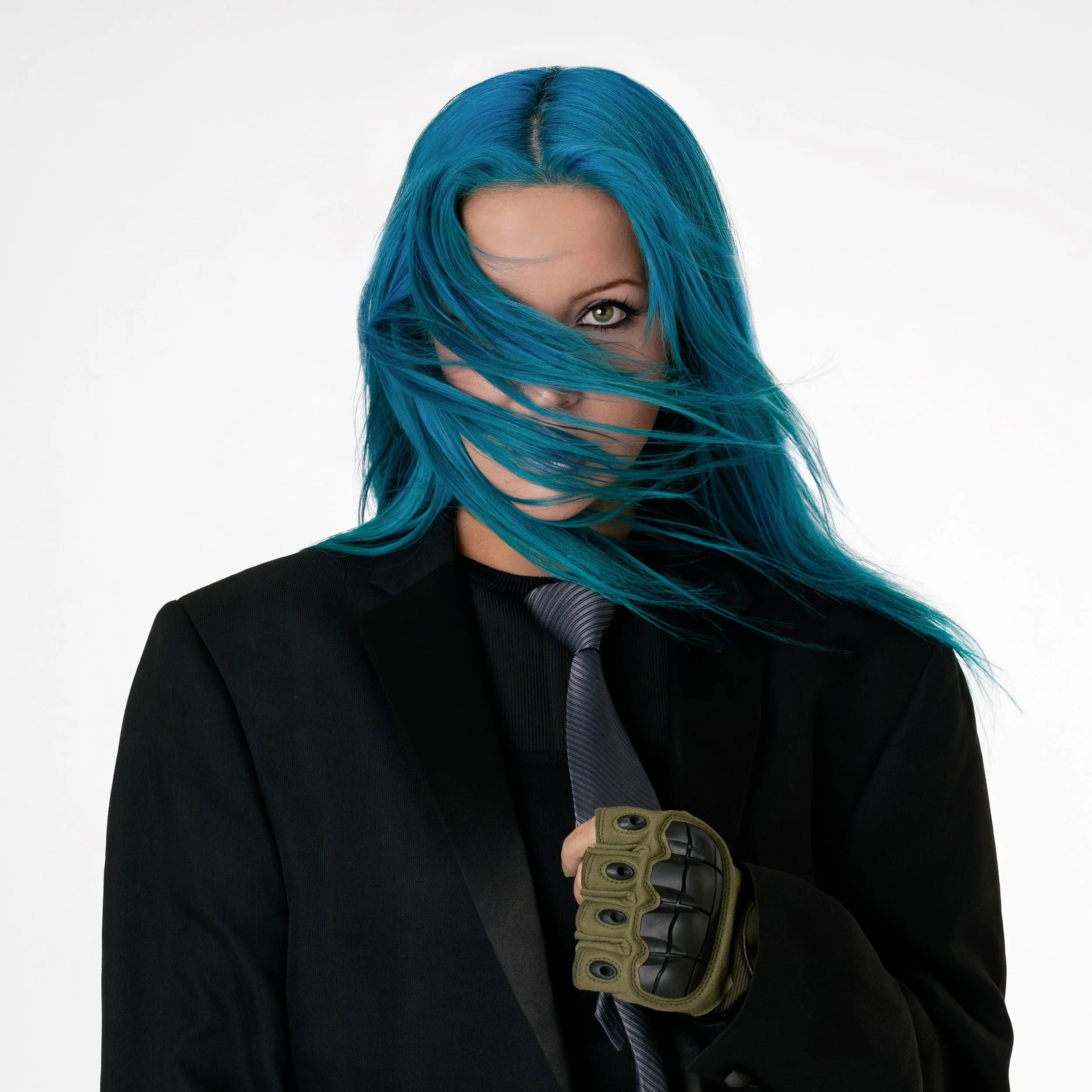
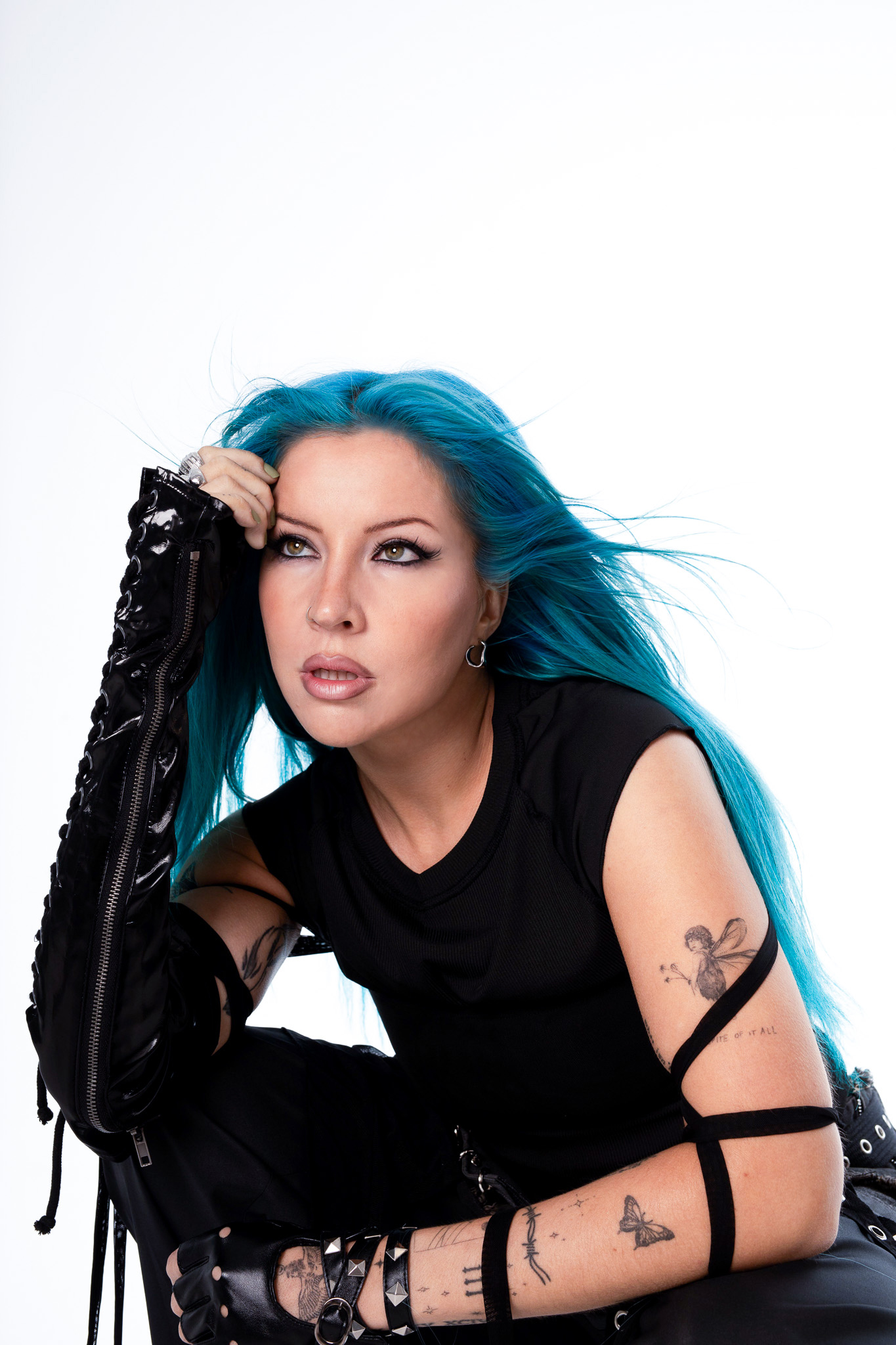
Not On Stage: Your visual identity, from the bright blue hair to the Y2K-inspired aesthetic, feels inseparable from the music. How do fashion and visuals help communicate the emotional world of Satellite?
Charlotte Sands: Fashion connects all my influences. I grew up listening to early 2000s artists like Hilary Duff and Kelly Clarkson, but as a teenager, I also loved bands like Mayday Parade and Bring Me the Horizon. Those worlds can feel separate sonically, but visually, you can blend them and create a bridge. For a long time, I felt pressure to fit into one aesthetic — like only wearing black or being mysterious — but that’s not really my personality. I’m not a super moody, mysterious person. Fashion lets me express who I actually am and how I perceive the music. It becomes another way to build the full world of the album.
Not On Stage: With over 300 million streams and significant chart success, how do you balance external validation with the internal themes of self-worth this album explores?
Charlotte Sands: As I get older, the weight of people’s opinions holds less power over me. It’s human to care about perception — I’m very emotional and I want people to like me — but I’ve learned not to let that carry into my creative process.
In the past, I would write songs while subconsciously thinking about critics who didn’t even exist yet — wondering what part of the chorus people would sing or if someone would be upset about a lyric. That mindset dims creativity. Now I try to keep those thoughts in their own box. People are allowed to have opinions about what I make, but that’s separate from who I am as a person. With age, you just get better at managing that balance.
Not On Stage: Was there a particular song on Satellite that was emotionally difficult to write or record? What made it challenging?
Charlotte Sands: “Water Me Down” was definitely the hardest to write. It’s about experiencing relationships where the things people initially love about you — being outgoing, motivated, ambitious — eventually become the things they resent. I often felt like I was told I was “too much” and needed to shrink myself.
I saw that happen not only in romantic relationships but in friendships too — watching bright people slowly dim themselves for someone else. Writing about that vulnerability was heavy, and it felt important to get it right before releasing it.
But even though it feels vulnerable, it also feels rewarding. I think a lot of women — and a lot of people — will relate to it. It feels less scary and more like a shared therapy session with everyone listening.
